PROGRAM
tuesday,
september 22
12:00 - 13:00
welcome of participants
13:00 - 13:15
opening remarks
13:15 - 13:55
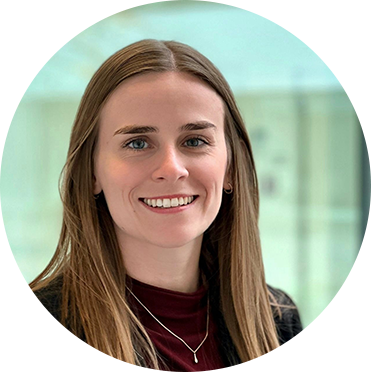
Plenary – Anna Dewenter
(Institute for Stroke and Dementia Research, Germany)
What’s new?
13:55 - 15:15
Symposium – Brain connectivity: from mechanisms to disease models
Speakers :
- Mario Tranfa
- Elise SAUL
- Gerard Temprano-Sagrera
- Alessandra Griffa
15:15 - 15:40
Datablitz
15:40 - 16:40
coffee break – poster session
16:40 - 18:00
Symposium – Imaging Methods
Speakers :
- Yasmine Salman
- Milan Nemy
- Beatriz Padrela
- Nikolaus Weiskopf
wednesday,
september 23
09:00 - 10:00
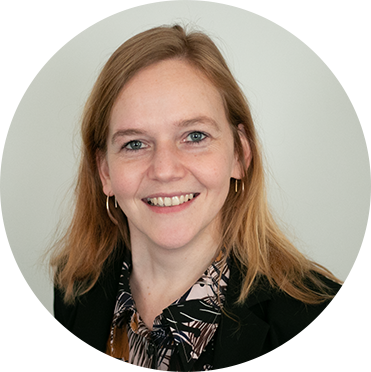
Plenary – Susanne van Veluw
(University of Edinburgh, UK)
CAA: imaging and small vessel pathology
10:00 - 10:30
Coffee Break
10:30 - 11:50
Symposium – New insights from imaging research on non-AD pathologies
Speakers :
- Ignacio Roura
- Rosaleena Mohanty
- Amanda Annettesdotter
- Cèlia Cruz Escalera
11:50 - 12:15
Datablitz
12:15 - 13:15
Lunch
13:15 - 14:35
Symposium – Sleep and brain health in aging
Speakers :
- Anders Fjell
- Géraldine Rauchs
- Angeliki Tsapanou
- Grégory Hammad
14:35 - 15:35
Coffee Break – Poster Session
15:35 - 16:55
Symposium – Pharmacological and non-pharmacological interventions
Speakers :
- Nick Fox
- Antonio Valero-Cabré
- Emma Gummesson
- Konstantinos Chiotis
thursday,
september 24

10:00 - 10:40
Coffee Break
10:40 - 12:00
Symposium – Artificial Intelligence & Machine Learning
Speakers :
- James Cole
- Somayeh Maleki Balajoo
- Sofía Gassó
- Vera Komeyer
12:00 - 12:30
Awards
12:30 - 12:40
Closing remarks
Plenary Sessions
Anna Dewenter
Juan Helen Zhou
Susanne van Veluw
symposium
1. Brain connectivity: from mechanisms to disease models
#1 Mario Tranfa
Amsterdam UMC
« A Connectome in Motion: Capturing Structural Changes Across the Alzheimer’s Continuum »
#2 Elise Saul
INSERM UA20 NEUROPRESAGE
« A unified connectome framework reveals divergent mechanisms of atrophy across dementia syndromes »
#3 Gerard Temprano-Sagrera
BarcelonaBeta Brain Research Center
« White matter hyperintensities mediate the association between CSF proteomics and cognitive decline in Alzheimer’s disease »
#4 Alessandra Griffa
Leenaards Memory Center, CHUV
« Brain Connectivity to Understanding Inter-Individual Variability in Tau Pathology and Disease Progression in Alzheimer’s Disease »
2. Imaging Methods
#5 Yasmine Salman
UCLouvain
« 50μm ex vivo MRI reveals distant layer-specific hippocampal degeneration in early AD »
#6 Milan Nemy
Czech Technical University
« Deep learning-based cholinergic pathway imaging in Alzheimer’s disease »
#7 Beatriz Padrela
Donders Institute for Brain, Cognition and Behaviour, Radboud University, Nijmegen, the Netherlands
« Perfusion, Blood Brain Barrier and AD »
#8 Nikolaus Weiskopf
Max Planck Institute
« Imaging Microstructure with high performance MRI »
3. New insights from imaging research on non-AD pathologies
#9 Ignacio Roura
Universitat de Barcelona
« Glymphatic Dysfunction in Synucleinopathies: MRI Proxies and Clinical and Neurodegenerative Correlates »
#10 Rosaleena Mohanty
Karolinska Institute
« Imaging correlates of polypathology in Alzheimer’s disease »
#11 Amanda Annettesdotter
Lund University
« Neuropathological correlates of amygdala subregional volumes»
#12 Celia Cruz Escalera
Universitat de Barcelona
« Phenotype-specific white-matter degeneration in FTD using longitudinal diffusion MRI »
4. Sleep and brain health in aging
#13 Anders Fjell
Center for Lifespan Changes in Brain and Cognition, University of Oslo
« Relation of sleep patterns to brain and cognitive health »
#14 Géraldine Rauchs
Normandie Université, UNICAEN, INSERM, UA20, Neuropresage, GIP Cyceron, Caen, France
« Sleep apnea and Alzheimer’s disease neuroimaging biomarkers »
#15 Angeliki Tsapanou
University of Patras
« Links between objective sleep measures and hippocampal subfield volumes »
#16 Grégory Hammad,
GIGA-CRC human imaging, University of Liège
« Sex-dependent loss of lateral hypothalamic integrity due to habitual napping »
5. Pharmacological and non-pharmacological interventions
#17 Nick Fox
Dementia Research Centre UCL
« New roles and new questions for MRI in the era of anti-amyloid therapies for AD »
#18 Antonio Valero-Cabré
Institut du Cerveau Paris
« MRI Neuronavigated and E-Field Model based Transcranial Direct Current stimulation (tDCS) to modulate language impairments in early-onset neurodegenerative conditions: Comparative outcomes & upcoming challenges»
#19 Emma Gummesson
University of Gothenburg
« Detecting Learning-induced Synaptic Changes In Mild Cognitive Impairment Using Sv2a Pet »
#20 Konstantinos Chiotis
Karolinska Institutet; UCSF
« Clinical and PET outcomes following Aβ-targeting therapies in sporadic Early Onset Alzheimer’s disease; trial emulation using the LEADS cohort »
6. Artificial Intelligence & Machine Learning
#21 James Cole
UCL Hawkes Institute
« The brain’s biological age and neurodegeneration: Towards real-world and representative predictors of disease risk and health outcomes »
#22 Somayeh Maleki Balajoo
Institute of Neuroscience and Medicine, Brain and Behaviour (INM 7), Research Center Juelich
« Disentangling heterogeneity in grey matter alterations in multiple sclerosis using generative normative modelling »
#23 Sofía Gassó
Universitat Oberta de Catalunya
« Neuroimaging signatures across APOE genotype in Alzheimer’s disease revealed by explainable machine learning »
#24 Vera Komeyer
Research Centre Jülich
« Age-sensitive structural hotspots as sparse, cross-cohort features for Alzheimer’s Disease prediction »